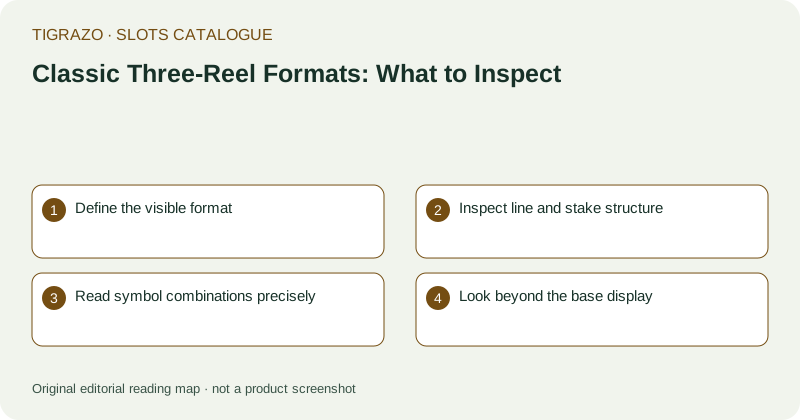
Define the visible format
A three-reel category usually identifies three vertical reels in the main display. The number of visible rows can still vary, and decorative symbols may appear outside the active award positions. A catalogue image can therefore be ambiguous. Look for an explicit layout description or an information diagram that distinguishes active positions from surrounding artwork. The word classic is a style label, not a standard technical specification.
Inspect line and stake structure
A three-reel game may have one evaluation line or several. If stake is divided across lines, the award basis can differ from a total-stake multiplier. Some designs also distinguish coin value from coin count. Record those fields separately. A compact interface does not remove the need to understand what the displayed stake includes, especially when the paytable changes with a selectable stake component.
Read symbol combinations precisely
Traditional-looking symbols can have non-obvious combination rules. Mixed groups may pay, a symbol may have a special any-position award, or a wild may substitute only under certain conditions. In a hypothetical example, three identical symbols and three symbols from a shared family could be separate paytable entries. The illustration alone cannot tell you whether the mixed arrangement qualifies or which award takes precedence.
Look beyond the base display
A three-reel format can include additional rounds, a separate wheel or a jackpot condition. These features may be absent from the catalogue thumbnail. Their presence does not change the ordinary reel count, but it does change the completeness of a description that calls the game simply one-line play. Catalogue text should distinguish the main format from supplementary mechanics and avoid suggesting that fewer reels guarantee fewer rules.
A compact inspection card
- Active reels, rows and evaluation positions.
- Line count and whether all lines are included.
- Credit, coin and total-stake units.
- Mixed-symbol awards and substitution exceptions.
- Additional features and eligibility conditions.
The category does not establish RTP or volatility. A smaller display can support a wide range of mathematical structures, and a familiar symbol set does not make outcomes easier to predict. Read published configuration information independently of the visual classification.
For catalogue purposes, three-reel is a useful filter when it identifies a desired display structure. It becomes misleading when combined with unsupported promises of simplicity, steadiness or better returns. A precise card describes the layout, then lets the documented rules explain everything the category cannot.
Another useful field is the award display's denomination. A paytable expressed in credits can appear larger than a currency-based table without offering a larger equivalent award. Preserve conversion information so that catalogue comparisons do not accidentally reward whichever interface uses the biggest-looking numbers.